
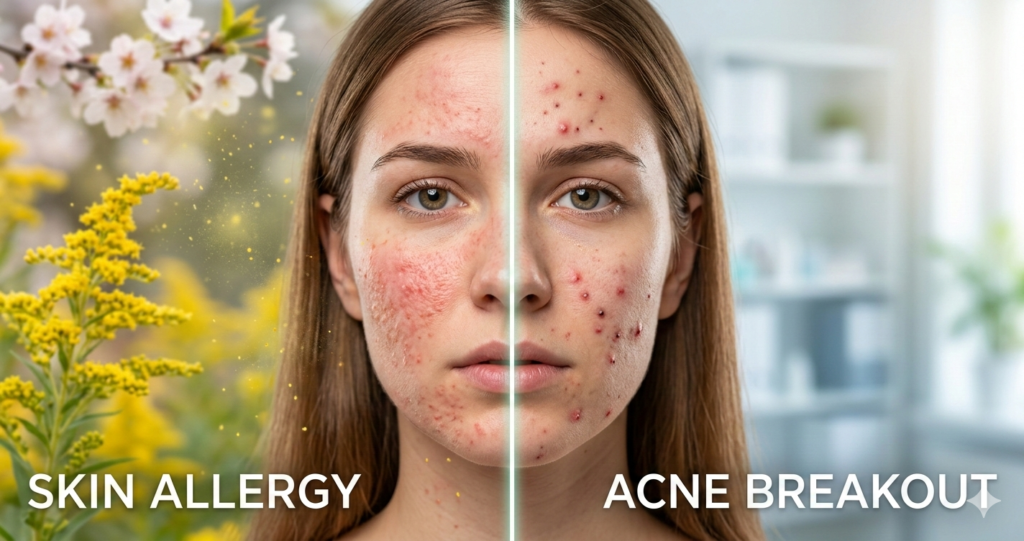
Pollen season can turn your skin upside down. Many people suddenly notice breakouts, redness, itching, or small bumps and assume their acne is getting worse. In reality, some of these flares are triggered by seasonal allergens rather than clogged pores.
This confusion is common during spring when pollen counts rise sharply. According to the World Allergy Organization, allergic diseases affect up to 30–40% of the global population. At the same time, acne remains one of the most common skin conditions worldwide, affecting nearly 85% of people between ages 12 and 24, with millions of adults continuing to experience breakouts (external link suggestion: American Academy of Dermatology acne statistics page).
When two extremely common conditions overlap during seasonal change, it becomes difficult to tell them apart. The symptoms may look similar at first glance, but the causes and treatment approach are very different. Understanding the distinction helps you avoid worsening your skin with the wrong products.
Table of Contents
Let’s First Understand: What Exactly Is Acne?
Acne develops when hair follicles become clogged with excess oil, dead skin cells, and bacteria. This blockage leads to inflammation and forms blackheads, whiteheads, red bumps, or deeper cysts.
Hormones are a major driver. Fluctuations during puberty, menstrual cycles, stress, or conditions like PCOS increase oil production. Environmental factors such as pollution and dust can further block pores, especially in urban environments.
Globally, acne affects more than 650 million people and is ranked among the top 10 most prevalent diseases worldwide (external source suggestion: Global Burden of Disease Study).
Acne lesions are usually tender or sore rather than intensely itchy. They tend to develop gradually over days or weeks. Without proper management, acne can leave dark marks or scars, which makes early and consistent care important.
What Happens to Your Skin During Seasonal Allergies?
Seasonal allergic reactions occur when the immune system overreacts to environmental triggers such as pollen, dust, or airborne irritants. When exposed, the body releases histamines, which cause inflammation in the skin.
Pollen particles are microscopic and easily settle on exposed areas like the face and neck. During peak pollen seasons, dermatology clinics often see an increase in patients complaining of itchy rashes and reactive skin. Research also shows that airborne pollutants and allergens can weaken the skin barrier, making it more sensitive and inflamed (external link suggestion: Journal of Investigative Dermatology or similar peer-reviewed source).
Unlike acne, allergic skin reactions often start suddenly. You may notice redness, intense itching, burning, dry patches, or hive-like bumps. The skin around the eyes and cheeks is particularly sensitive. Many patients also experience sneezing, watery eyes, or nasal congestion at the same time.
Acne vs. Allergy: How to Tell the Difference
Although they may look similar, there are important differences that can guide you.
Appearance
Acne shows defined lesions such as blackheads, whiteheads, pus-filled pimples, or deeper nodules.
Allergic reactions appear as red, itchy patches or small rash-like bumps that spread irregularly.
Sensation
Acne is usually tender or sore when touched.
Allergic reactions are often intensely itchy or burning.
Speed of Onset
Acne develops gradually over days or weeks.
Allergic flares can appear within hours of exposure.
Location
Acne typically affects oily areas like the forehead, nose, and chin.
Allergies may involve eyelids, cheeks, neck, or any exposed skin area.
If symptoms persist or feel unusual, professional evaluation is important. Treating an allergic rash with acne medication can worsen dryness, while ignoring acne may increase the risk of scarring.
Why Acne Can Flare During Pollen Season
Even if your primary concern is acne, seasonal changes can indirectly make it worse.
Pollen and dust settle on the skin and mix with oil and sweat, increasing congestion. Warmer temperatures stimulate sebaceous glands to produce more oil. At the same time, excessive cleansing or harsh products used to “control breakouts” may damage the skin barrier.
When the barrier weakens, inflammation increases. Inflammation is one of the key factors in acne development. This is why many people notice more breakouts during seasonal transitions.
Also Read: How Seasonal Change Affects Your Skin and What to Do During Early Spring
Dermatological Recommendations for Managing Seasonal Skin Flares
Managing seasonal skin issues requires a balanced approach rather than aggressive treatment.
First, focus on strengthening the skin barrier. Fragrance-free moisturizers containing ceramides, hyaluronic acid, or niacinamide help reduce irritation and improve resilience.
Cleansing should remain gentle and consistent. Washing twice daily with a mild cleanser is usually sufficient. For acne-prone skin, low-strength salicylic acid can help unclog pores, but it should be introduced gradually.
Daily sunscreen is essential. A non-comedogenic SPF 30 or higher protects against UV damage, which can worsen pigmentation after acne.
After outdoor exposure, washing your face and changing pillow covers can help remove pollen residue. Keeping indoor air clean during peak pollen days also supports skin health.
In some cases, professional treatments may support recovery. For example, procedures like HydraFacial can help by deeply cleansing pores, gently exfoliating dead skin cells, and infusing hydrating and antioxidant-rich serums. When performed under dermatological supervision, it can assist in clearing environmental buildup while supporting barrier repair.
However, this should be part of a broader treatment plan tailored to your skin type and condition.
Final Thoughts
Not every breakout during spring is acne, and not every red patch is an allergy. With acne affecting hundreds of millions worldwide and allergic diseases impacting up to 40% of the population, seasonal overlap is common.
The key is correct diagnosis and a treatment strategy that supports your skin rather than aggravates it.
If you are experiencing persistent breakouts, itching, redness, or skin discomfort this season, a professional assessment can help determine whether you are dealing with acne, an allergic reaction, or both.
For personalized evaluation and evidence-based treatment options, schedule a consultation with Dr. Shumila Khan at Dermalase and give your skin the clarity it deserves.
Call: (+92) 304 1110844, (+92) 51 2211113, (+92) 303 555 8444 & (+92) 303 555 8222
Visit us at: A-103, Main Sumbal Road, F-10/1, Islamabad
Clinic Direction: https://maps.app.goo.gl/JaFoKc5hm59TT2WS6
For more details, visit: www.drshumailakhan.com