
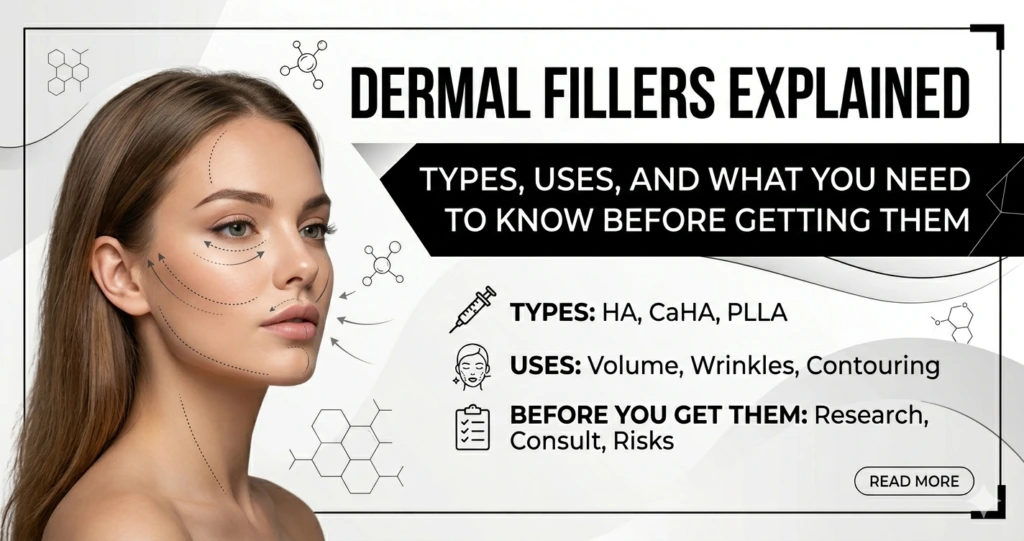
Many people notice changes in their faces as they age. Skin may start to look loose, cheeks may lose volume, and lines around the mouth or eyes may become more visible. These changes are natural, but they can affect how fresh and confident a person feels.
In recent years, dermal fillers have become one of the most popular non-surgical treatments for restoring volume and improving facial balance. However, there is still a lot of confusion around what fillers actually do, where they are used, and whether they are safe.
As a dermatologist, one of the most common questions patients ask is whether dermal fillers are right for them. The answer depends on understanding how fillers work, what results to expect, and choosing the right approach for your face.
This guide will help you understand dermal fillers in a simple and clear way so you can make an informed decision.
Table of Contents
- What Are Dermal Fillers?
- Why Do People Choose Dermal Fillers?
- Types of Dermal Fillers
- Areas Where Dermal Fillers Are Used
- Who Should Consider Dermal Fillers?
- Who Should Avoid or Delay Fillers?
- What to Expect During the Procedure?
- Results and How Long They Last
- Are Dermal Fillers Safe?
- Common Myths About Dermal Fillers
- Dermatologist’s Perspective
- FAQs About Dermal Fillers
- Final Thoughts
What Are Dermal Fillers?
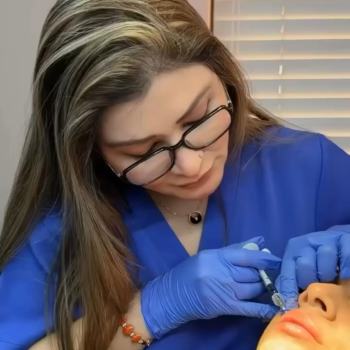
Dermal fillers are injectable treatments used to restore lost volume, smooth out lines, and improve facial contours. They are placed under the skin in specific areas to enhance structure and support.
As we age, the natural fat, collagen, and elasticity in our skin decrease. This leads to sagging, hollow areas, and wrinkles. Fillers help replace lost volume and improve the overall shape of the face.
Most modern fillers are temporary and gradually dissolve over time. This makes them a flexible and controlled option, especially when done under proper dermatological guidance.
Why Do People Choose Dermal Fillers?
People choose dermal fillers for different reasons, but the goal is usually to look more refreshed without surgery.
Some of the most common concerns include:
- Loss of volume in the cheeks or face
- Fine lines and deeper wrinkles
- Thin or uneven lips
- Lack of jawline definition
- Tired appearance due to under-eye hollows
Instead of changing how you look, fillers are used to restore balance and improve natural features.
Types of Dermal Fillers
Not all fillers are the same. Different types are used depending on the area being treated and the desired result.
Hyaluronic Acid (HA) Fillers
These are the most commonly used fillers. Hyaluronic acid is a substance naturally found in the skin that helps retain moisture.
HA fillers are popular because they:
- Provide natural-looking results
- Improve hydration and volume.
- They are temporary and adjustable
They are widely used for lips, cheeks, and under-eye areas.
Calcium Hydroxylapatite Fillers
These fillers are thicker and are usually used for deeper lines and volume loss.
They not only add volume but also help stimulate collagen production over time. This makes them suitable for areas like cheeks and jawline, where more structure is needed.
Poly-L-lactic Acid Fillers
These work differently compared to traditional fillers. Instead of immediate volume, they stimulate the body’s own collagen production.
Results appear gradually over time and are often used for overall facial rejuvenation rather than specific areas.
PMMA (Polymethylmethacrylate) Fillers
These are longer-lasting fillers used in selected cases. They provide structural support and are generally considered when long-term correction is needed.
They require careful evaluation and should only be used under expert supervision.
Areas Where Dermal Fillers Are Used
Dermal fillers can be used in different parts of the face depending on the concern.
They are commonly used for:
- Dermal Fillers for Cheeks To restore volume and create a lifted appearance
- Dermal Fillers for Lips To improve shape, symmetry, and fullness
- Dermal Fillers for Jawline To enhance definition and contour
- Dermal Fillers for Chin To balance the facial profile
- Dermal Fillers for Under Eyes To reduce a hollow or tired look
- Dermal Fillers for Smile Lines (Nasolabial folds) To soften deep lines
- Dermal Fillers for Marionette Lines To improve lines around the mouth
Each area requires a different technique and amount of filler. This is why a proper facial assessment is important before treatment.
Who Should Consider Dermal Fillers?
Dermal fillers are suitable for individuals who want to improve their appearance without surgery.
They may be a good option if you:
- Notice early signs of aging
- Have volume loss in certain areas
- Want better facial balance or contour
- Prefer non-surgical treatments with minimal downtime
It is important to have realistic expectations. Fillers can enhance your appearance, but they are not meant to completely change your face.
Who Should Avoid or Delay Fillers?
While fillers are generally safe, they may not be suitable for everyone at all times.
Treatment may be delayed if:
- There is an active skin infection or acne in the area
- You are dealing with certain medical conditions
- There are unrealistic expectations about results
A proper consultation helps determine whether the treatment is suitable for you.
What to Expect During the Procedure?
The process usually starts with a detailed consultation, during which the face is assessed and a treatment plan is created.
During the procedure:
- The area is cleaned and prepared
- A fine needle or cannula is used for injection
- The treatment usually takes 20 to 40 minutes
Most patients experience only mild discomfort. There may be slight swelling or redness, which usually settles within a few days.
Results and How Long They Last
Results from dermal fillers are usually visible immediately after the treatment, especially with hyaluronic acid fillers.
Depending on the type of filler and the area treated, results can last between 6 to 18 months. Maintenance sessions may be required to keep the desired look.
Are Dermal Fillers Safe?
Dermal fillers are considered safe when administered by a qualified, experienced dermatologist.
Safety depends on:
- Correct product selection
- Proper technique
- Understanding of facial anatomy
One of the biggest risks comes from receiving treatments from untrained or unqualified providers. This can lead to uneven results or complications.
Choosing a trained dermatologist ensures both safety and natural-looking results.
Common Myths About Dermal Fillers
There are many misconceptions about fillers, which often create unnecessary fear.
Fillers make you look unnatural
When done correctly, fillers enhance your natural features without making your face look overdone.
When done correctly, fillers enhance your natural features without making your face look overdone.
Fillers are permanent
Most fillers are temporary and gradually dissolve over time.
Most fillers are temporary and gradually dissolve over time.
Only older people need fillers
Many younger individuals use fillers for contouring and balance, not just aging concerns.
Many younger individuals use fillers for contouring and balance, not just aging concerns.
Dermatologist’s Perspective
From a dermatological perspective, dermal fillers should always be used with a focus on balance and natural results. The goal is not to add volume everywhere but to restore what has been lost and improve overall facial harmony.
Every face is different. A personalized approach based on facial structure, skin condition, and patient goals leads to better and safer outcomes.
Modern aesthetic treatments are about subtle improvement, not dramatic change.
FAQs About Dermal Fillers
Are dermal fillers painful?
Most patients experience only mild discomfort. Numbing options are available to make the procedure more comfortable.
Most patients experience only mild discomfort. Numbing options are available to make the procedure more comfortable.
How long do fillers last?
They usually last between 6 and 18 months, depending on the type and area.
They usually last between 6 and 18 months, depending on the type and area.
Can fillers be reversed?
Yes, hyaluronic acid fillers can be dissolved if needed.
Yes, hyaluronic acid fillers can be dissolved if needed.
Is there any downtime?
There is minimal downtime. Mild swelling or redness may occur for a short period.
There is minimal downtime. Mild swelling or redness may occur for a short period.
Are fillers safe for everyone?
They are safe for most people, but a proper consultation is necessary to confirm suitability.
They are safe for most people, but a proper consultation is necessary to confirm suitability.
Final Thoughts
Dermal fillers are an effective and widely used option for improving facial appearance without surgery. When used correctly, they can restore volume, smooth lines, and enhance natural features.
The most important factor is choosing the right treatment plan for your individual needs, rather than following trends.
A proper consultation ensures safe treatment and results that look natural and balanced. If you are considering dermal fillers in Islamabad or want to understand what suits your skin and facial structure, a professional consultation is the best place to start.
Call: (+92) 304 1110844, (+92) 51 2211113, (+92) 303 555 8444 & (+92) 303 555 8222
Visit us at: A-103, Main Sumbal Road, F-10/1, Islamabad
Clinic Direction: https://maps.app.goo.gl/JaFoKc5hm59TT2WS6
Visit us at: A-103, Main Sumbal Road, F-10/1, Islamabad
Clinic Direction: https://maps.app.goo.gl/JaFoKc5hm59TT2WS6